The luxury denim market has grown considerably over the past two decades. Brands across Europe, Japan, and the United States now compete for the buyer who wants something more than fast fashion — a pair of jeans built to last, fitted with intention, and made from materials worth paying for. Within this segment, Jacob Cohen occupies a distinct position. Understanding why requires looking at what the brand actually does differently, and how it compares to the alternatives.
The Landscape: Who Competes in Luxury Denim
Before examining Jacob Cohen specifically, it helps to understand the field. Luxury denim broadly falls into three categories.
Japanese selvedge denim houses — brands like Momotaro, The Strike Gold, and Iron Heart — prioritize raw denim culture: heavy-weight fabrics, slow fading, a DIY relationship between wearer and garment. The aesthetic is workwear-derived, the appeal is craftsmanship through simplicity, and the price reflects hand-loomed production.
American heritage brands — Raleigh Denim, Imogene + Willie, 3sixteen — draw from the same workwear tradition but filter it through a contemporary American lens. The construction is serious, the fabrics are excellent, and the positioning is artisanal rather than luxury.
Italian luxury denim — Jacob Cohen, Tramarossa, PT Torino — approaches denim from a tailoring perspective rather than a workwear one. The question is not how authentically the jeans fade, but how precisely they fit, how elegantly they pair with a blazer, and how well they hold their shape across years of wear.
Jacob Cohen sits firmly in this third category — and largely defines it.
Fit as Philosophy
The most immediate difference between Jacob Cohen and most competitors is the approach to fit. Where Japanese selvedge brands often produce a single or limited range of cuts — trusting the buyer to size and break in the denim themselves — Jacob Cohen engineers the fit from the outset.
Each pair goes through a detailed construction process that accounts for the relationship between waist, seat, thigh, and inseam independently. The result is a jean that fits the body rather than requiring the body to adapt to the jean. For buyers accustomed to tailored clothing — suits, blazers, dress trousers — this is the expected standard. For denim, it remains comparatively rare.
The Jacob Cohen collection at Original Luxury reflects this range of cuts: slim, straight, and tailored options that allow different body types to find the construction that works for them, rather than defaulting to one universal silhouette.
Fabric: Italian and Japanese, Selected for Longevity
Jacob Cohen uses both Italian and Japanese denim — choosing the source based on the specific weight, texture, and aging quality appropriate for each style in a given season. This is meaningfully different from brands that work with a single mill or a standard fabric weight across all products.
Italian denim mills, particularly those in the Veneto region, have developed expertise in mid-weight fabrics that hold structure without stiffness — denim that looks sharp on day one and continues to look sharp after a hundred washes. Japanese denim mills, by contrast, specialize in heavier fabrics with more pronounced texture and aging character.
Jacob Cohen’s ability to work across both traditions — selecting the right fabric for the right product rather than defaulting to one approach — gives the brand a versatility that single-source producers cannot match.
Hardware and Finishing: Where the Cost Is Visible
One of the clearest differentiators between Jacob Cohen and mid-market “premium” denim is the hardware. Buttons, rivets, and leather patches are not afterthoughts — they are designed components.
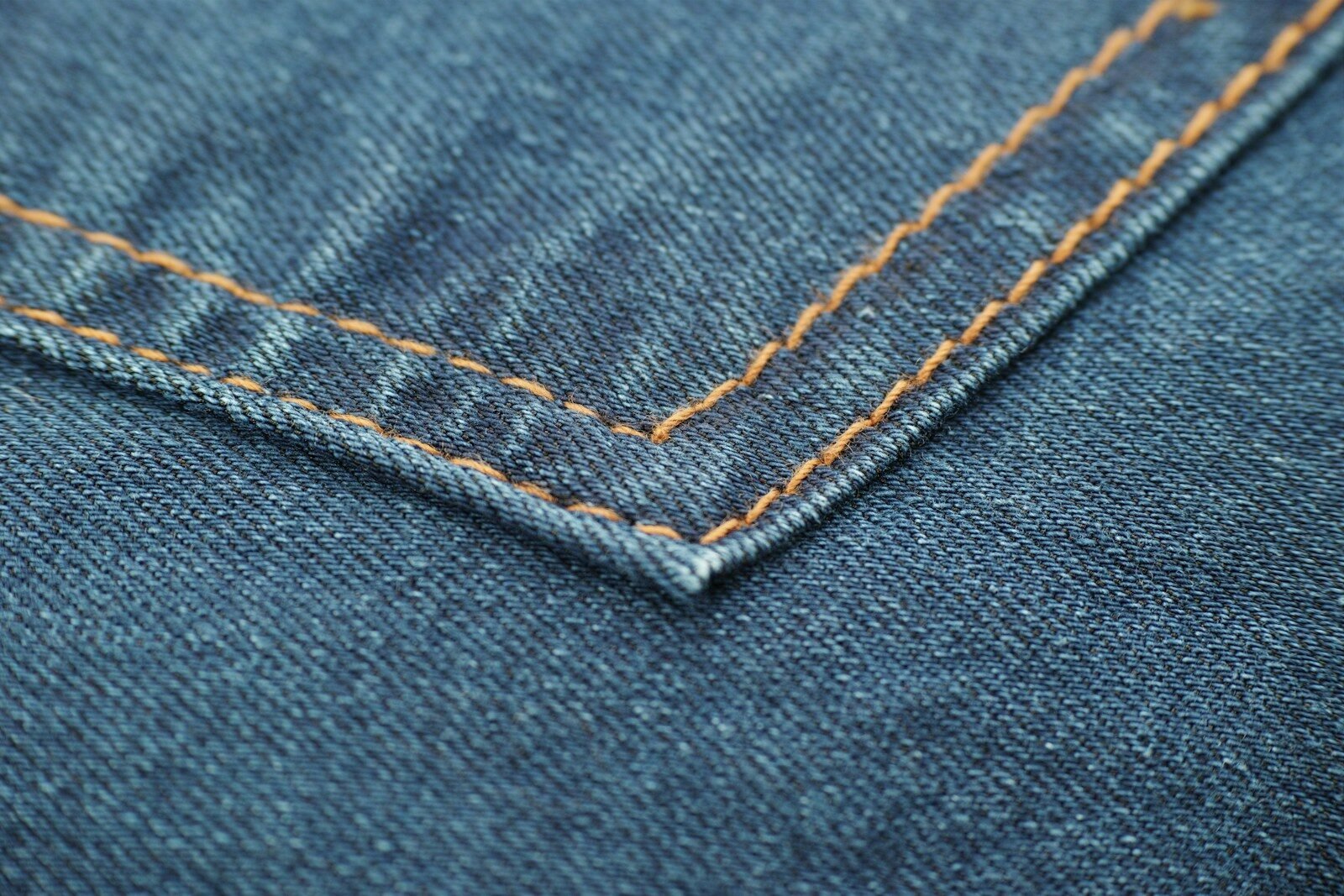
The back patch on a Jacob Cohen jean is typically hand-stitched leather, not glued or heat-applied. The buttons are solid, heavy, and matched to the overall aesthetic of each specific model. The stitching color, the placement of pockets, and the subtle embroidery details on the back pocket are consistent across a pair — and consistent across pairs within the same production run.
This level of consistency is expensive to produce. It requires closer quality control, slower production, and more skilled finishing work. The buyer pays for it in price and receives it in longevity — hardware that does not corrode, loosen, or look cheap after eighteen months of wear.
How Jacob Cohen Compares to Closer Competitors
Within the Italian luxury denim segment, the closest comparison is Tramarossa — another Venetian brand working at a similar price point with similar tailoring ambitions. Tramarossa’s construction is excellent and their fabric selection serious, but the brand is less widely distributed and has a smaller range of cuts. For buyers who cannot access a physical stockist, this limits the ability to find the right fit without trying multiple pairs.
Expand the comparison to Brunello Cucinelli or Loro Piana — both of which produce luxury denim as part of broader collections — and the gap becomes a matter of specialization. Those brands make excellent jeans, but denim is not their core competency. Jacob Cohen has built its entire identity around the single garment, which shows in the depth of cut options and the precision of construction.
The Case for Buying Jacob Cohen in Canada
Access has historically been the challenge for Canadian buyers interested in Jacob Cohen. The brand’s European distribution is strong; North American retail presence is thinner.
Original Luxury, based in Mississauga, Ontario, carries Jacob Cohen as a core collection — not a single seasonal selection, but an ongoing range with multiple cuts and washes available.
The Investment Argument
Luxury denim at Jacob Cohen’s price point is an investment purchase, and it should be evaluated as one. The relevant question is not whether the upfront cost is high — it is — but whether the cost-per-wear calculation justifies the purchase over time.
A pair of Jacob Cohen jeans, worn regularly and cared for correctly (cold wash, hang dry, no tumble drying), will maintain its fit, its fabric integrity, and its appearance for five to ten years. Against that timeline, the cost-per-wear drops into territory competitive with mid-market denim replaced every two seasons.
The additional variable is the tailoring premium: jeans that fit well eliminate the need for alterations, look appropriate in more contexts, and require less effort to style. For buyers already investing in tailored clothing across the rest of their wardrobe, bringing that same standard to their denim is not an indulgence — it is consistency.
About the Author