
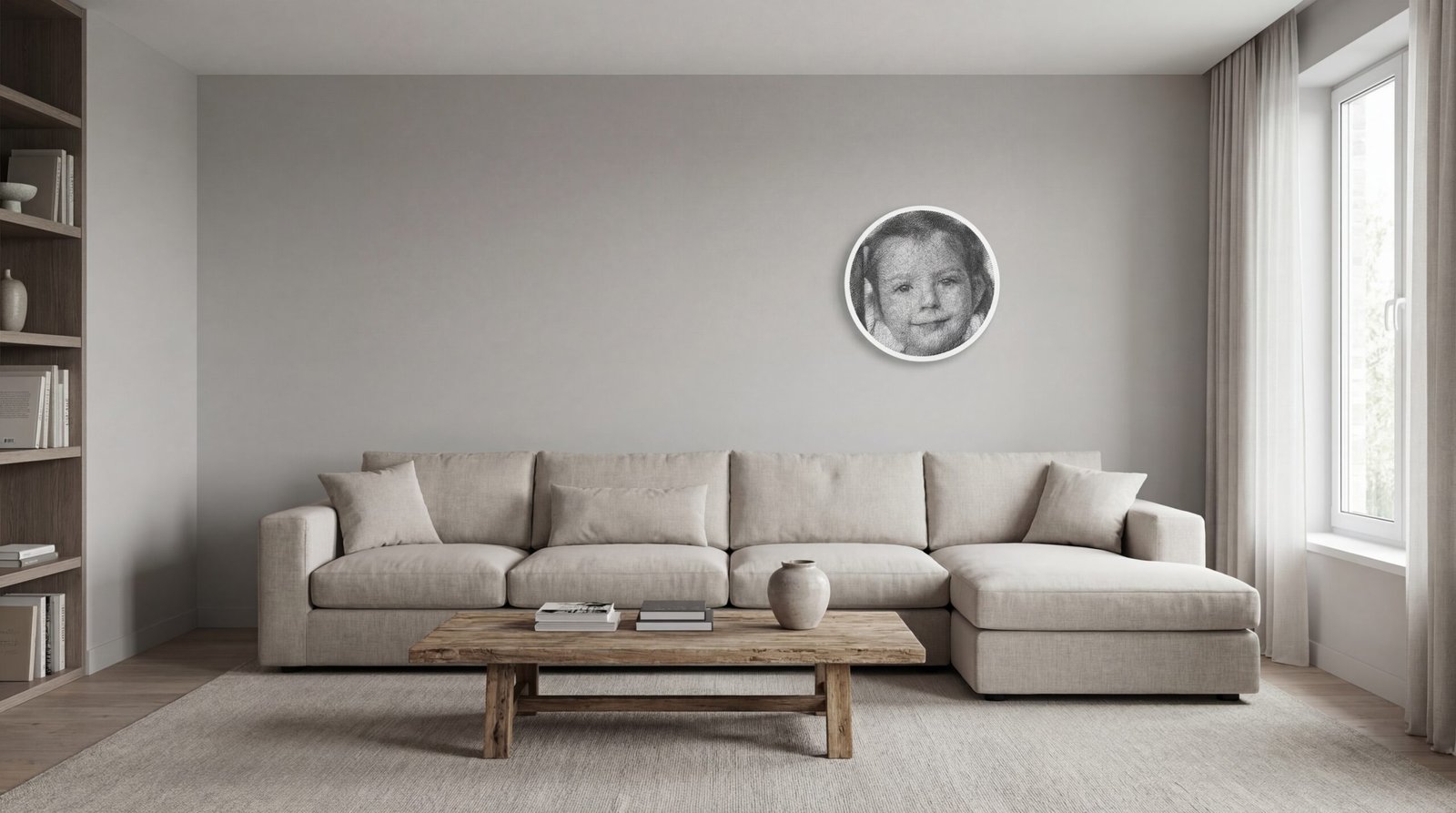
Creative trends come and go. Some become fleeting social media moments; others quietly evolve into lasting forms of expression. DIY string art belongs to the second category. What once appeared as geometric hobby décor has developed into a refined medium for personal storytelling.
At first glance, string art seems simple: nails arranged on a wooden board, thread woven between them. But modern interpretations reveal a much more sophisticated structure. Today’s designs are often based on digitally calculated weaving paths that translate photographs into precise networks of lines.
The result is not random decoration — it is controlled complexity.
The Appeal of Constructed Minimalism
Contemporary interior design favors clarity. Clean surfaces, neutral tones, and intentional focal points define many modern homes. In this context, string art offers something rare: visual depth without visual overload.
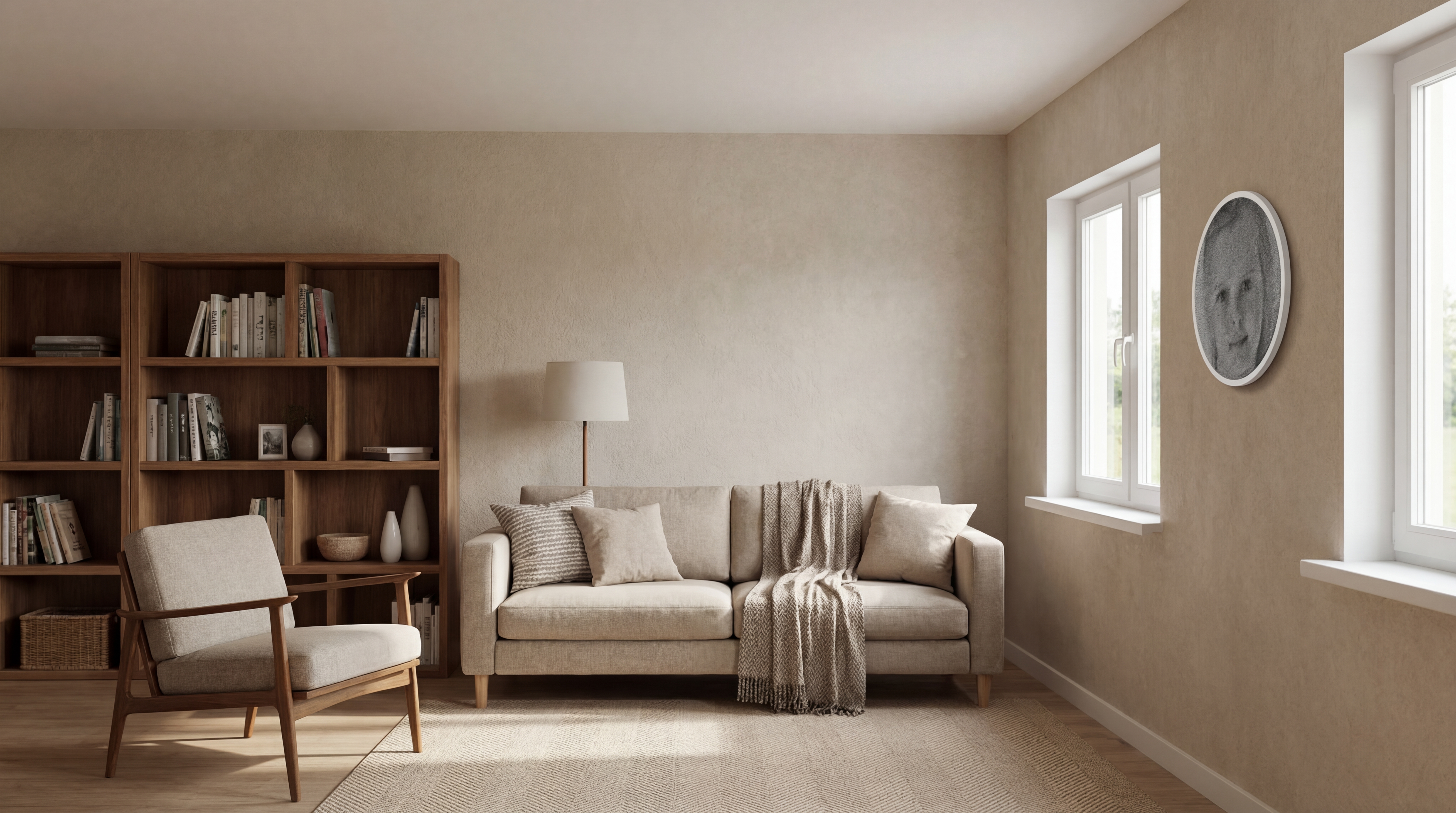
A monochrome portrait made of thread does not compete with its surroundings. Instead, it integrates naturally into minimalist spaces. Because the image is formed by lines rather than solid blocks of color, it appears lighter and more architectural.
Round formats in particular have become popular. The circular shape softens the portrait and removes the rigid frame effect often associated with traditional artwork. It feels modern, balanced, and intentional.
Precision Meets Patience
What distinguishes modern DIY string art from older craft versions is the integration of algorithmic planning. The weaving sequence is generated based on contrast analysis. Darker areas receive more thread intersections; lighter areas remain open. This ensures recognizable detail even without shading or color variation.
However, while the pattern may be digitally structured, the assembly remains manual.
Each thread must be wrapped carefully from nail to nail. The process is repetitive but not monotonous. With every layer added, the portrait becomes clearer. There is a visible transformation taking place — an image emerging from abstraction.
This gradual clarity is part of the emotional appeal. It mirrors the way memories themselves gain definition when revisited thoughtfully.
A Shift Toward Meaningful Hobbies
In recent years, many people have rediscovered hands-on creativity. Not necessarily to become artists, but to engage in something tangible. DIY activities offer a break from constant screen interaction.
String art sits at an interesting intersection between technology and craftsmanship. It begins with digital analysis and ends with a physical object built through time and attention.
Brands operating in this segment approach the concept differently. Some focus on delivering finished custom pieces. Others emphasize participation, allowing customers to assemble their own portrait using structured templates. Within this approach, companies like Spatar combine pre-drilled wooden bases with precisely calculated thread maps, lowering the barrier to entry while maintaining structural accuracy.
The emphasis shifts from artistic skill to careful execution.
A Different Kind of Gift
One reason DIY string art resonates is its suitability as a personal gift. A portrait based on a shared photograph carries inherent emotional weight. Yet when the piece is assembled by hand, it gains an additional layer of meaning.
Time becomes part of the gift.
Unlike mass-produced décor, a handmade string art portrait reflects intention. It is neither impulsive nor purely decorative. It represents effort invested in preserving a specific moment.
Because most modern designs rely on a restrained color palette — often black thread on natural wood — they remain versatile. They complement contemporary interiors rather than overwhelming them.
From Pixels to Structure
Perhaps the most compelling aspect of string art is its symbolic transformation. A digital image — composed of pixels and stored in memory — becomes a structured network of physical lines. The translation from screen to thread introduces material presence.
Up close, the viewer sees hundreds of individual connections. From afar, the face reappears. The artwork functions on two levels simultaneously: technical abstraction and emotional realism.
In an age defined by instant visual consumption, this layered experience feels refreshing.
DIY string art may appear simple at first glance. Yet beneath the surface lies a carefully engineered balance between mathematics and emotion, precision and patience. And it is precisely this balance that secures its place beyond short-lived craft trends.
About the Author